
批改 Receiving Criticism
-
当别人批评我们的时候,我们有什么反应呢?
反唇相讥?
在心里嘀嘀咕咕?
一肚子委屈,郁郁不乐?
闻过则喜?
有位朋友在杰出才俊的聚会中大开眼界。
彬彬有礼的才俊们非常地谦虚,并且格外珍惜别人给予的评价。
因为对他们来说是进步的空间。
由此可见他们的成功源自于良好的学习态度。
我们该学习“子路闻过则喜”的精神!
宋·朱熹《集注》:“曾子以此三者日省其身,有则改之,无则加勉, 其自治诚切如此,可谓得为学之本矣。”
智者言, 虚心地接受别人的意见。
别人说对了,指出自己的问题,才知道要改。
也会更警惕自己做好。
若别人说错了也能够接纳,别人会愿意继续教导我们。
实际上,无则勉之,给予我们的帮助不容小视。
往往让自己事前得到预警。
无论如何,别人批评我们,正确的反应将让生命获得提升的机会。
-
When others criticize us, how do we respond?
Do we retaliate?
Complain silently?
Feel wronged and unhappy?
Or are we able to rejoice upon hearing our faults?
A friend once attended a gathering of outstanding individuals. What struck him most was their humility—they deeply valued feedback from others, seeing it as space for growth.
This reveals the root of their success: a genuine willingness to learn.
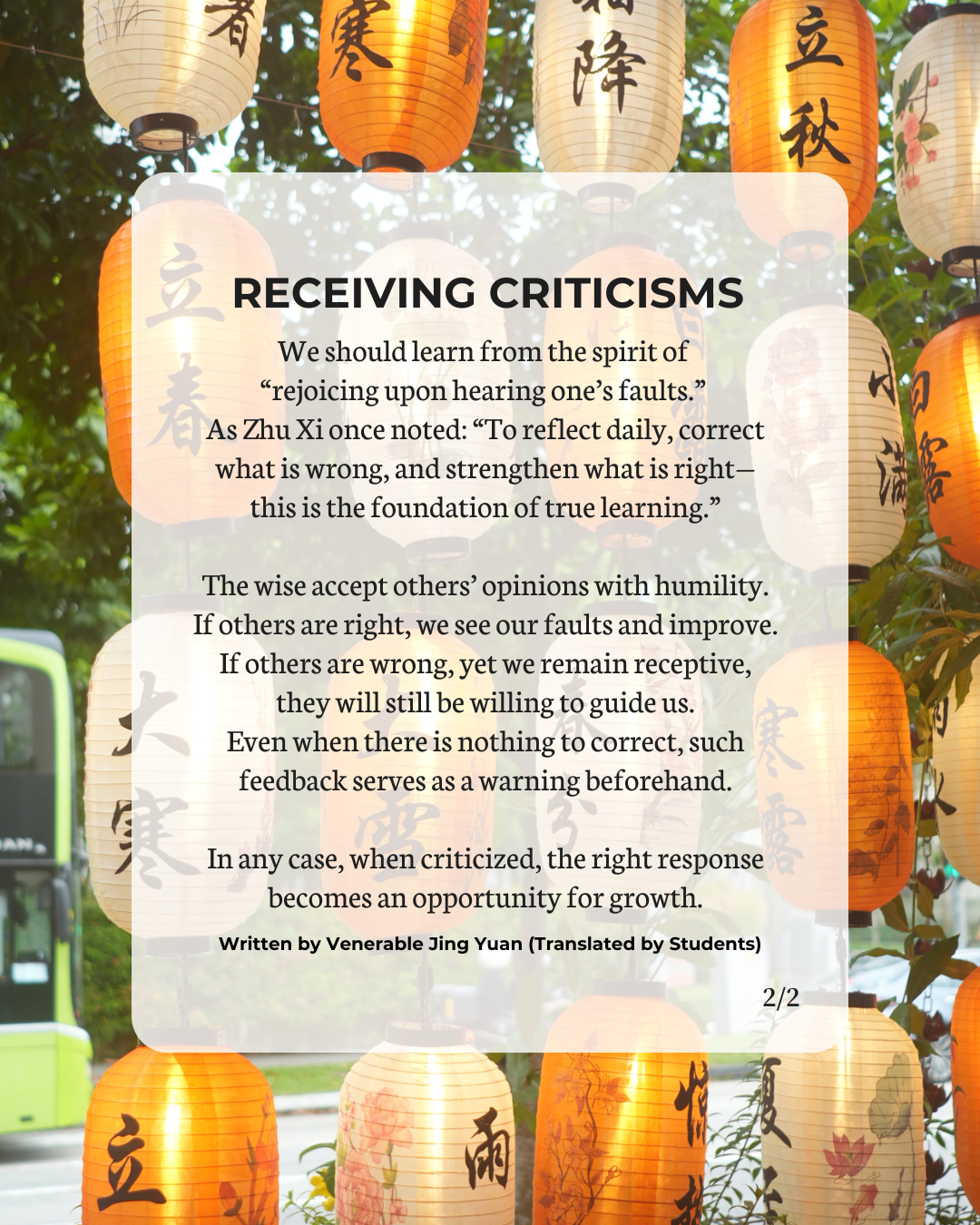
We should learn from the spirit of “rejoicing upon hearing one’s faults.” As Zhu Xi once noted: to reflect daily, correct what is wrong, and strengthen what is right—this is the foundation of true learning.
The wise accept others’ opinions with humility.
If others are right, we see our faults and improve.
If others are wrong, yet we remain receptive, they will still be willing to guide us.
Even when there is nothing to correct, such feedback serves as a warning beforehand.
In any case, when criticized, the right response becomes an opportunity for growth.